Garage & Utility Shelves
Maximizing utility storage through teardrop pallet racks and rivet-lock systems. An analysis of point-load capacities and the structural benefits of ceiling-mounted overhead configurations.
The Requirements of Utility Storage
Utility storage environments—garages, basements, and workshops—differ drastically from residential living spaces. Aesthetics are secondary to load capacity, durability against impact, and resistance to environmental fluctuations (humidity, temperature swings, and chemical spills). Utility shelving systems are engineered to handle dense, bulky items like automotive parts, power tools, and liquid storage.
Boltless Rivet Shelving
The dominant architecture for modern utility shelving is the boltless rivet system. This design utilizes rolled steel upright posts stamped with keyhole slots. Horizontal beams feature raised metal rivets on their ends. During assembly, the rivet is inserted into the wide top of the keyhole slot and tapped downward with a mallet, locking it securely into the narrow lower channel.
The primary advantage of rivet shelving is rigidity without cross-bracing. The interference fit of the rivet in the slot tightens as weight is added to the shelf, creating an incredibly stable frame that resists lateral racking. Typical rivet shelving can support 500 to over 1,000 pounds per shelf tier, depending on the gauge of the steel and the thickness of the decking material (usually particleboard or wire mesh).
Teardrop Pallet Racking
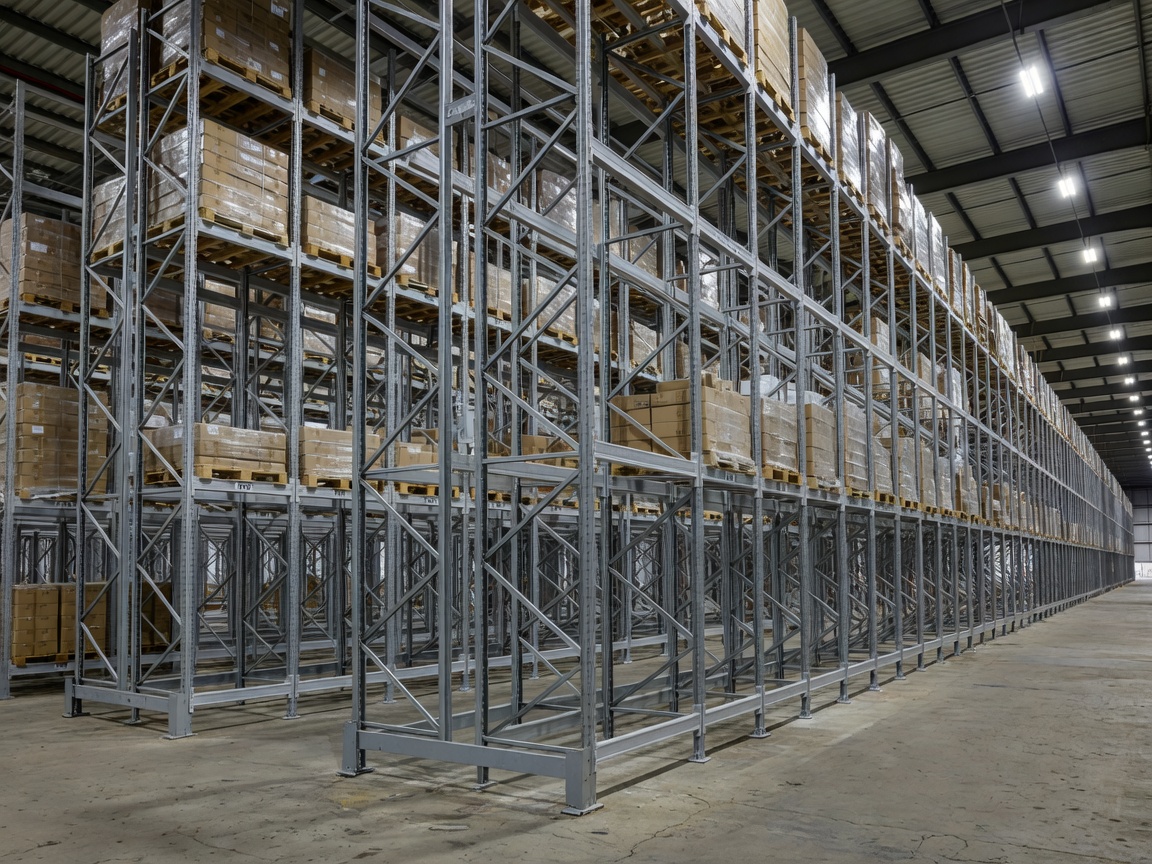
For extreme utility storage, residential consumers often turn to commercial teardrop pallet racking. Similar in concept to rivet shelving, teardrop systems use massive steel uprights with teardrop-shaped cutouts. Heavy horizontal step-beams lock into these cutouts using safety pins to prevent accidental dislodgment.
Pallet racking is designed for forklift loading and can support thousands of pounds per level. While overkill for standard household items, it is the safest solution for storing heavy machinery, lumber, or engine blocks. Because of its height and capacity, anchoring teardrop uprights to the concrete floor is structurally mandatory to prevent catastrophic collapse.
Overhead Ceiling Racks
Garages possess a massive volume of unused space near the ceiling. Overhead storage racks exploit this void. These systems consist of a steel frame suspended from ceiling joists by adjustable vertical struts.
The engineering challenge of overhead storage is the load capacity of the ceiling joists themselves, rather than the steel rack. Most residential garage ceilings are framed with manufactured trusses designed to support drywall and light snow loads on the roof above, not concentrated dead loads hanging from their bottom chords.
Installation requires precise identification of joist orientation and span. Weight must be distributed across multiple joists to prevent truss deflection. Manufacturers typically limit these systems to 400-600 pounds, but cautious structural assessment of the framing is necessary before loading them with heavy bins.
Decking Materials and Moisture
The weakest link in utility shelving is often the decking. Standard rivet shelving comes with raw particleboard decks. In a climate-controlled room, this is adequate. However, in a humid garage or basement, particleboard acts like a sponge, absorbing moisture from the air. Over time, it swells, loses its structural integrity, and begins to sag heavily under load.
For unconditioned utility spaces, steel wire decking or melamine-coated boards are structurally superior alternatives. Wire decking will not warp, provides high visibility from below, and allows dust and debris to fall through rather than accumulating around tools and storage bins.